

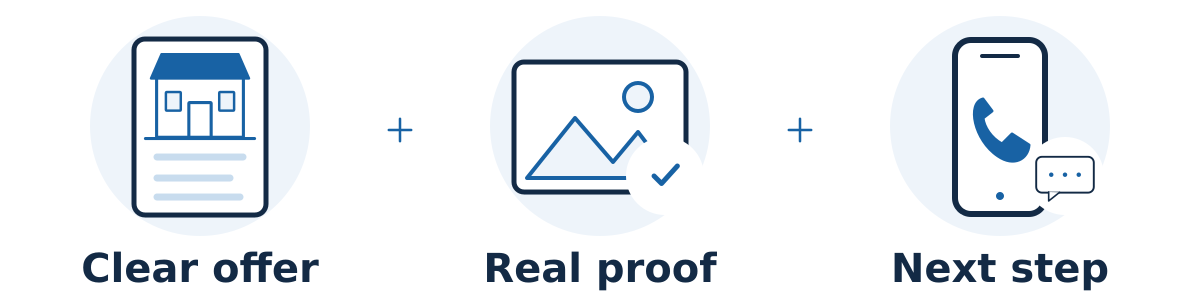
A useful service page helps a potential customer decide whether you solve their problem, whether your business is a good fit, and what to do next. It needs a clear explanation of the service, credible evidence, practical buying information, and an easy way to contact you.
Qualified leads are people whose needs match your work. A page should therefore explain boundaries as well as benefits: the customers you serve, locations you cover, and relevant conditions or exclusions.
Build the page around a customer's decision
Open with the service and its purpose. State what you do in familiar language. Help visitors recognize their situation without reading a long company introduction.
Explain who the service fits. Describe the types of jobs, customers, or properties you can genuinely support. If important work is excluded, say so.
Describe the process and scope. Cover what happens during an inquiry, assessment, delivery, and any relevant follow-up. Only state processes your business actually uses.
Show verifiable proof. Use genuine project examples, relevant qualifications, original photos, and customer feedback you are permitted to publish. Explain the circumstances behind results rather than implying every customer will get the same outcome.
Answer buying questions. Discuss cost drivers, preparation, scheduling considerations, service coverage, and how an estimate is determined. Publish prices or turnaround promises only when they are accurate and approved.
Offer a clear next step. Make the phone number, inquiry form, or booking route easy to find. Tell visitors what information will help you respond.
Make the page easy to understand and use
Give the page a descriptive title and clear main heading. Keep sections focused, make the mobile layout readable, and test the inquiry route on a real phone. Link to supporting answers where they help a decision, rather than making the service page cover every possible question.
Google recommends clear, descriptive page titles in its title-link guidance. Its people-first content guidance also supports showing relevant experience and trustworthy information. These are reasons to be specific and accurate, not permission to invent credentials or testimonials.
A hypothetical example
Imagine an electrician offering home EV-charger installation. A useful service page could explain the assessment, compatibility questions, electrical capacity checks, what the estimate covers, and the areas served. A genuine installation example could show how the company handled a particular property. The inquiry form might ask for the location and charger model, without requesting unnecessary personal information.
A service-page acceptance test
Give a draft to someone who understands your customers but did not write the page. Ask them to find the answers below without an explanation from you. Note what they can actually point to, rather than whether they say the page “looks good.”
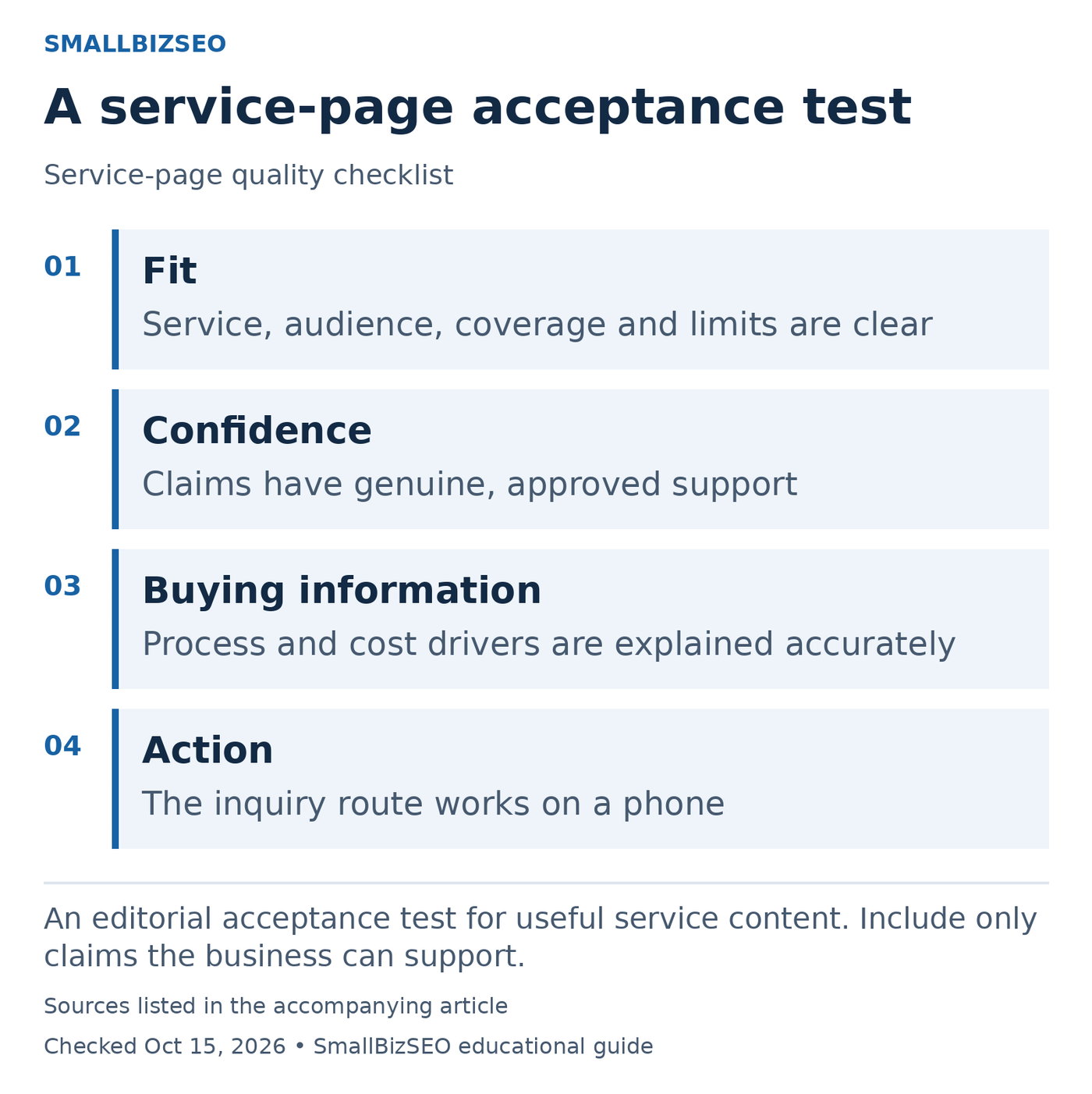
An editorial acceptance test for useful service content. Include only claims the business can support.
Sources: Google official guidance. Checked October 15, 2026. This visual is an editorial guide, not measured client results.
Fit: who is the service for, what problem does it address, and what important limits apply? A hypothetical EV-charger installation page should help a homeowner recognize the service and understand that suitability must be assessed. It should not imply that every property can receive the same installation.
Confidence: what supports the claims? Identify a genuine qualification, approved project example, or clear description of experience. Mark anything needing verification before publication. Never fill a proof gap with an invented testimonial or a stock image presented as completed work.
Buying information: what happens next, what might affect scope or cost, and what information should the customer prepare? Publish exact prices or time commitments only when the business has confirmed them. A useful explanation of cost drivers is better than an unsupported promise.
Action: can the reviewer contact the business from a phone and understand what will happen after submission? Send a test inquiry through the approved testing process and check its destination. Fix the first confusing or broken step before adding more persuasive copy. Keep the resulting checklist with the page so future edits do not accidentally remove information that was already doing useful work.
Reference: Google’s official guidance. This checklist is an editorial planning aid; checked October 15, 2026.
Common mistakes and the next step
Avoid vague claims such as “unmatched quality” without evidence, repeated city lists, borrowed manufacturer text that leaves buying questions unanswered, and forms that ask for too much before a conversation. A longer page is not automatically more useful, and a good page cannot guarantee inquiries or rankings.
Read your most important service page as a first-time customer. Write down the three questions you still need answered before contacting the business, then address those gaps and test the contact method.