

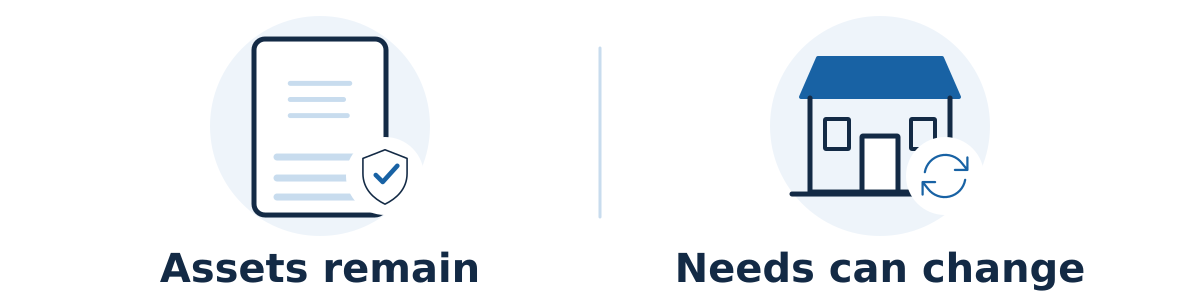
Pausing SEO does not automatically erase the pages and improvements already in place. Their future value depends on whether they remain useful, accessible, accurate, and competitive, so results may hold, improve, or decline after active work stops.
Organic listings are not rented placements that require an SEO subscription. Google says it does not charge for inclusion or ranking in organic search. Separately, your website, hosting, software, and any supplier agreements may have ongoing costs or dependencies to review.
What can continue, and what can change?
Well-developed service pages, helpful articles, and technical improvements can continue to serve customers while they remain in place. You do not need to rewrite every page simply because a project has ended.
However, customers' needs, your services, competitors, and search results can change. Google explains that search positions are dynamic. A gradual decline could have several causes; a sudden drop should be investigated rather than automatically blamed on reduced spending.
Make a pause deliberate
Confirm what remains available. Review ownership and access to the website, domain, content, reporting, and any software used. Ask whether anything depends on the current supplier's account or a separate subscription. Use the actual agreement to clarify what happens when work ends.
Keep essential operations running. Assign responsibility for hosting, renewals, backups, security updates, contact forms, and accurate business information. These responsibilities matter to customers whether or not an active SEO campaign continues.
Preserve a baseline and change history. Save the current priority pages, useful performance reports, completed work, and unresolved issues. Retain that information securely so a future provider or team member can understand the starting point.
Decide what monitoring you can maintain. Periodically test inquiries, review important search and lead trends, and watch for technical problems. The review frequency should fit how dependent the business is on website leads and how often the site changes.
Set a reason to reconsider. Examples include a new service launch, a website move, declining qualified inquiries, changed service areas, or renewed capacity to take on work. A specific trigger makes a pause easier to manage.
Example: reduce expansion, protect the essentials
Hypothetical example: A specialist installer is booked well ahead and wants to reduce marketing spending temporarily. It could pause new content projects while keeping its service details current, its inquiry process working, and its performance visible.
If availability changes, the business can update expectations on the site. When capacity opens again, it can review which services need renewed attention instead of restarting without records.
Pitfalls to avoid
Do not remove useful pages just because active SEO ends, cancel infrastructure without checking its role, or assume a provider owns every account it manages. Also avoid interpreting a quiet seasonal period as proof that you need to restart the same campaign unchanged.
If spending has produced little evidence of useful progress, reassess the strategy and implementation before renewing it. Continued activity should have a clear purpose.
Write a minimum-care handover before pausing
A pause is easier to manage when someone knows what remains their responsibility. Create a short handover that names the owner of the website, domain renewal, hosting, business listings, and inquiry tracking. Record where authorized access is managed without copying passwords into the document.
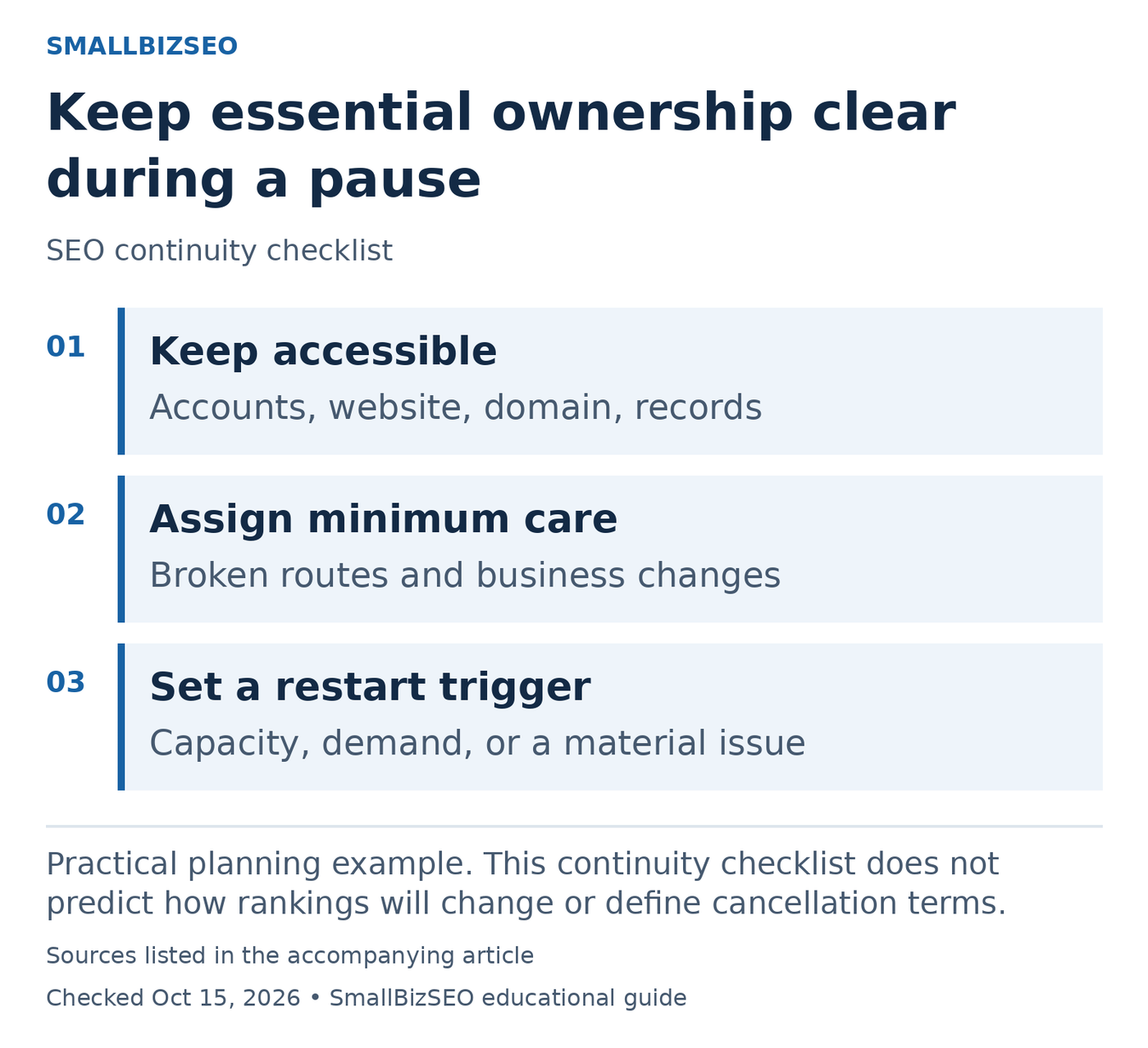
Practical planning example. This continuity checklist does not predict how rankings will change or define cancellation terms.
Sources: Google SEO Starter Guide. Checked October 15, 2026. This visual is an editorial guide, not measured client results.
Distinguish discretionary growth work from ordinary business upkeep. New supporting articles may wait; an incorrect phone number, unavailable website, or broken booking route still needs attention. Agree who will notice these problems and who can arrange a repair. This is a suggested continuity plan, not a statement of what any SEO agreement includes after cancellation.
Save a dated baseline for important pages and qualified inquiries, plus a list of unfinished changes. Note seasonal demand, advertising changes, and staffing constraints that could affect a later comparison. Avoid promising that existing visibility will remain unchanged for a specific number of months.
Choose a concrete reason to review the decision, such as reopening capacity for a service, entering a new market, or finding an unresolved customer-facing issue. Before ending an arrangement, check its actual notice, ownership, access, and handover terms with the provider rather than assuming this checklist changes the contract.
Reference: Google SEO Starter Guide. This continuity checklist does not predict how rankings will change or define cancellation terms.
Your next step
Create a short pause-and-handover checklist with an owner for each ongoing responsibility. Keep the website usable and the business results visible while you decide what level of investment makes sense next.