

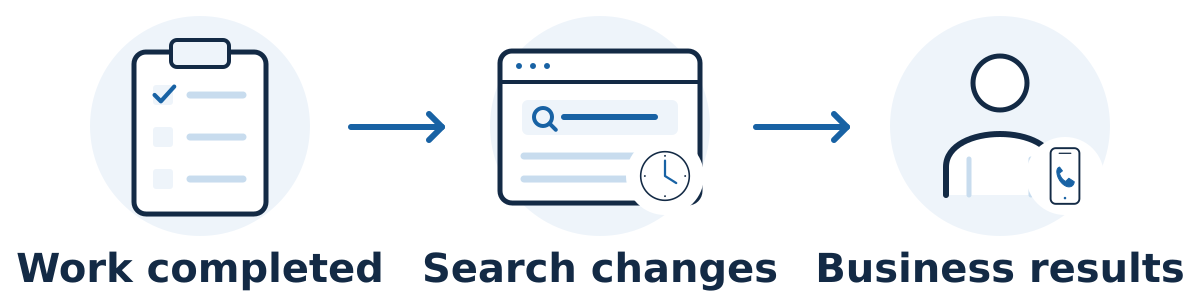
SEO has no reliable deadline that applies to every small business. Some changes can affect search results relatively quickly, while meaningful growth in qualified leads may take longer and is never guaranteed.
Google says changes can take from hours to several months to be reflected in Search. That describes the range of possible search responses, not a promise that a new campaign will deliver customers within a set number of months.
Separate three kinds of progress
Work completed. Important pages are improved, tracking is tested, and confirmed technical problems are fixed. These are deliverables you can verify. A report listing work is useful, but it does not prove the work is producing business results.
Search response. Relevant pages begin appearing for useful searches, impressions change, or qualified visitors arrive. Judge changes for the services and markets you actually target. An increase in unrelated queries is not evidence that the commercial plan is working.
Customer outcomes. Suitable prospects inquire, book, buy, or become customers. Your normal sales cycle adds time: a same-day repair service and a business selling annual contracts should not expect the same path from a search visit to revenue.
What can make progress slower?
The starting position matters. A business with useful existing pages and a clear technical fault faces a different task from a new website entering a competitive market. Missing service information, weak differentiation, slow approvals, limited implementation capacity, and an unclear offer can all delay useful results.
Seasonality also affects what you see. Fewer inquiries during a quiet buying period may not mean the work failed. Compare similar periods when possible and note major changes to your prices, availability, advertising, or sales process.
Example: two projects with different clocks
Hypothetical example: A repair company discovers that its main service page was accidentally excluded from search. Correcting that issue gives it a specific problem to verify. A second company has no page explaining its specialist service and needs to develop the offer, publish evidence of its experience, and compete for relevant searches.
The first project has a clearer early checkpoint, but neither company can promise when additional customers will arrive. Each should measure the next observable result rather than borrow a deadline from the other.
How to review a slow campaign
Agree on review dates and expected evidence before work starts. Ask what has shipped, which pages or searches are affected, what changed, and what will be tested next. Keep a dated change log so a flat graph can be compared with actual implementation.
If nothing is improving, investigate instead of simply waiting. Check that priority pages can appear in search, that tracking works, that the chosen searches match buyers, and that visitors can contact you. Change one coherent part of the plan at a time where practical.
Avoid daily ranking checks, guaranteed timelines, and repeated large rewrites before earlier changes can be evaluated. Equally, do not accept months of vague assurances without completed work and a clear explanation.
Review progress by evidence, not a countdown
Build a small review sheet around the next uncertainty. Start with the page or service being improved, the date work went live, the evidence already available, and the next question. This avoids comparing a finished technical repair with an unfinished content project as though they should produce the same result.
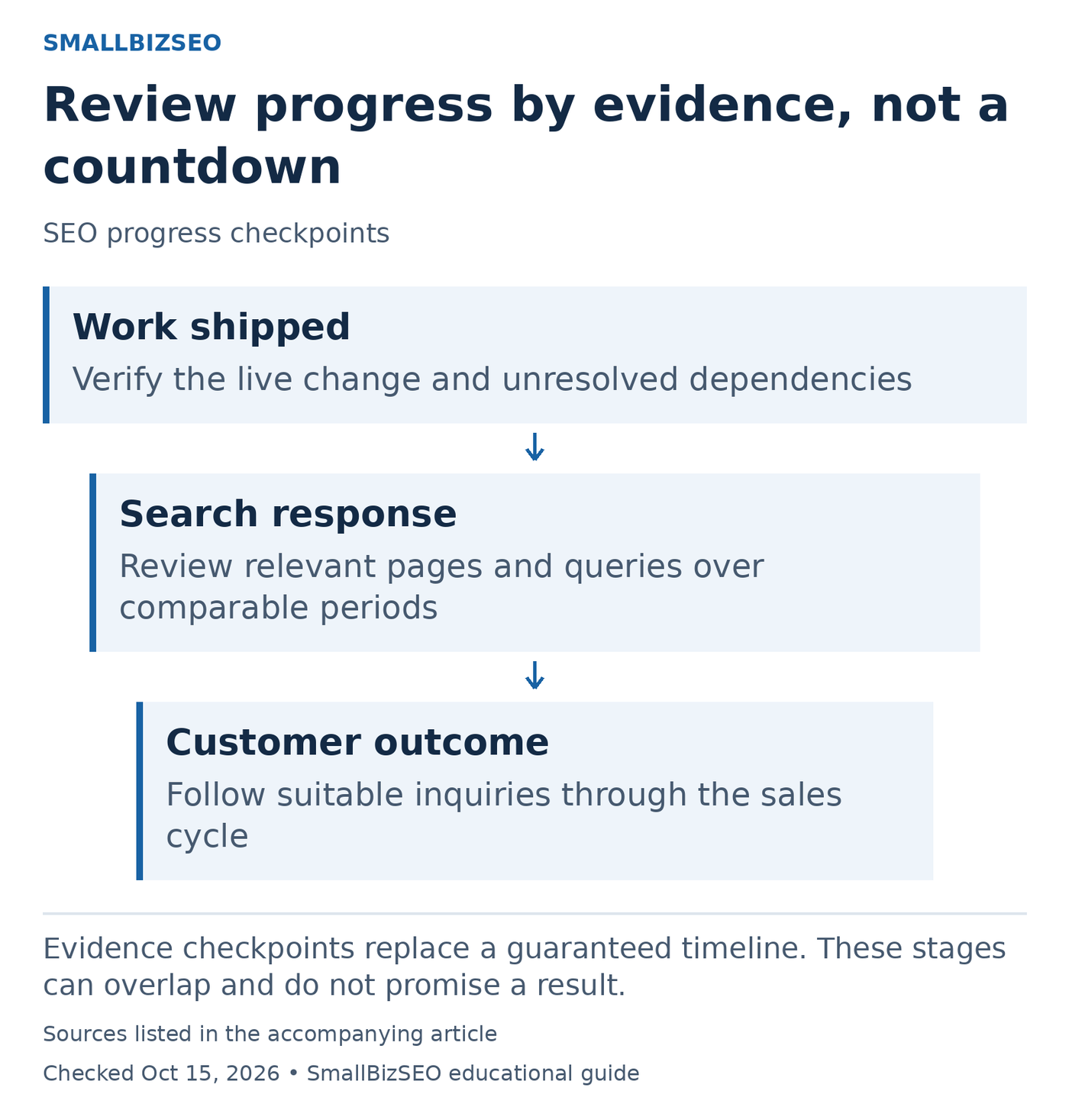
Evidence checkpoints replace a guaranteed timeline. These stages can overlap and do not promise a result.
Sources: Google official guidance. Checked October 15, 2026. This visual is an editorial guide, not measured client results.
At implementation review: ask to see the actual change. A corrected form should deliver a test inquiry; an updated service page should contain the approved information. If the work is still waiting for access or approval, record that dependency rather than calling it a search delay.
At search review: examine the affected pages and relevant queries over comparable periods. Separate whether Google has processed the page from whether it attracts the intended audience. Search Console evidence can help investigate processing; a rising impression count alone cannot establish customer demand or profitability.
At business review: trace suitable inquiries through your normal sales process. A prospect awaiting a proposal is different from a visitor who never contacts you. Note seasonality and changes in availability, price, advertising, or tracking before attributing every movement to SEO.
For a hypothetical new specialist service, the next useful checkpoint might be an approved page with working contact details. Later checkpoints concern relevant search visibility and qualified conversations. Agree the next review date and who owns the unresolved question. There is no universal month at which these stages must be complete.
Reference: Google’s official guidance. This checklist is an editorial planning aid; checked October 15, 2026.
Your next step
Ask for a plan with three columns: work to complete, evidence to watch, and the next review date. Keep the revenue goal visible alongside those milestones.