

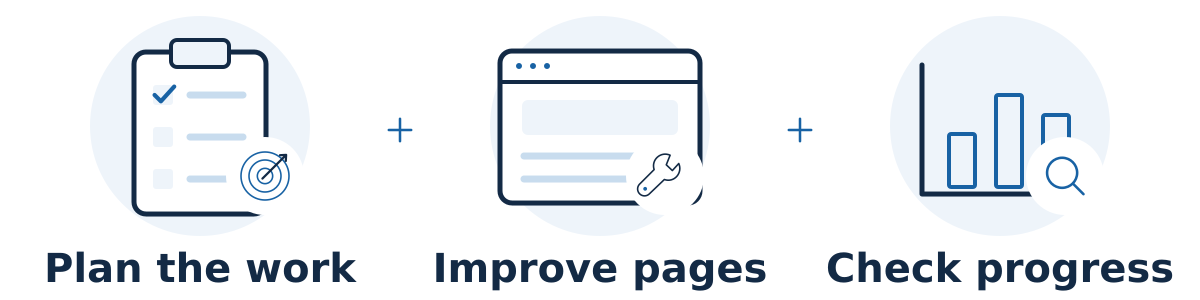
SmallBizSEO offers SEO strategy, content, technical improvements, local-search work, authority building, and performance reporting. The right combination depends on your website, customers, competition, and business goals. Before choosing a package, ask which activities will be included for your business and what the first priorities should be.
What are the main areas of work?
Our SEO services overview describes six connected areas:
Strategy: identifying search opportunities and deciding which work deserves attention first.
Content: helping useful service pages and supporting resources answer customer questions.
Technical SEO: addressing problems with access, crawling, website performance, and page structure.
Local visibility: improving relevant business information and location-focused search opportunities where geography matters.
Authority building: pursuing relevant links and publicity opportunities.
Reporting: connecting visibility and website activity with meaningful customer actions.
How do these services work together?
Consider a business that wants more inquiries for one profitable service. Keyword research helps identify what prospective customers need. Content explains the service, its suitability, and the next step. Technical work checks whether the page can be accessed and used properly. Relevant links can help people discover it. Measurement shows whether visitors become useful inquiries.
This is a hypothetical example, rather than a promised result. A different business might already have excellent content but need help with duplicate pages, a site migration, or inaccurate business listings. An audit helps distinguish those situations.
Is every activity included in every package?
A service list shows the kinds of work available. Your package discussion should establish the actual scope: which pages and markets are covered, what will be created or improved, who will implement changes, and how progress will be reviewed. The depth and volume of work matter as much as the labels.
For example, “technical SEO” might involve identifying a problem, implementing a fix, or coordinating with your developer. Those are different responsibilities. Clarify them before work begins, especially if your website uses a restricted platform or another company manages it.
What should I ask before getting started?
Which business goal is this work intended to support?
What evidence makes these the highest-priority tasks?
Which deliverables and implementation responsibilities are included?
What information or approvals will you need from me?
How will we distinguish completed work from improved results?
A useful answer should connect the work to a real problem your business faces. A long checklist alone does not show whether the right problem is being solved.
Translate a service label into an agreed deliverable
A useful scope conversation ends with a concrete description of the work. For any service label in a proposal, complete one sentence: “For [named pages or business area], the provider will deliver [specific output], while [named role] handles [dependency].” Leave unconfirmed fields blank rather than filling them from assumptions.
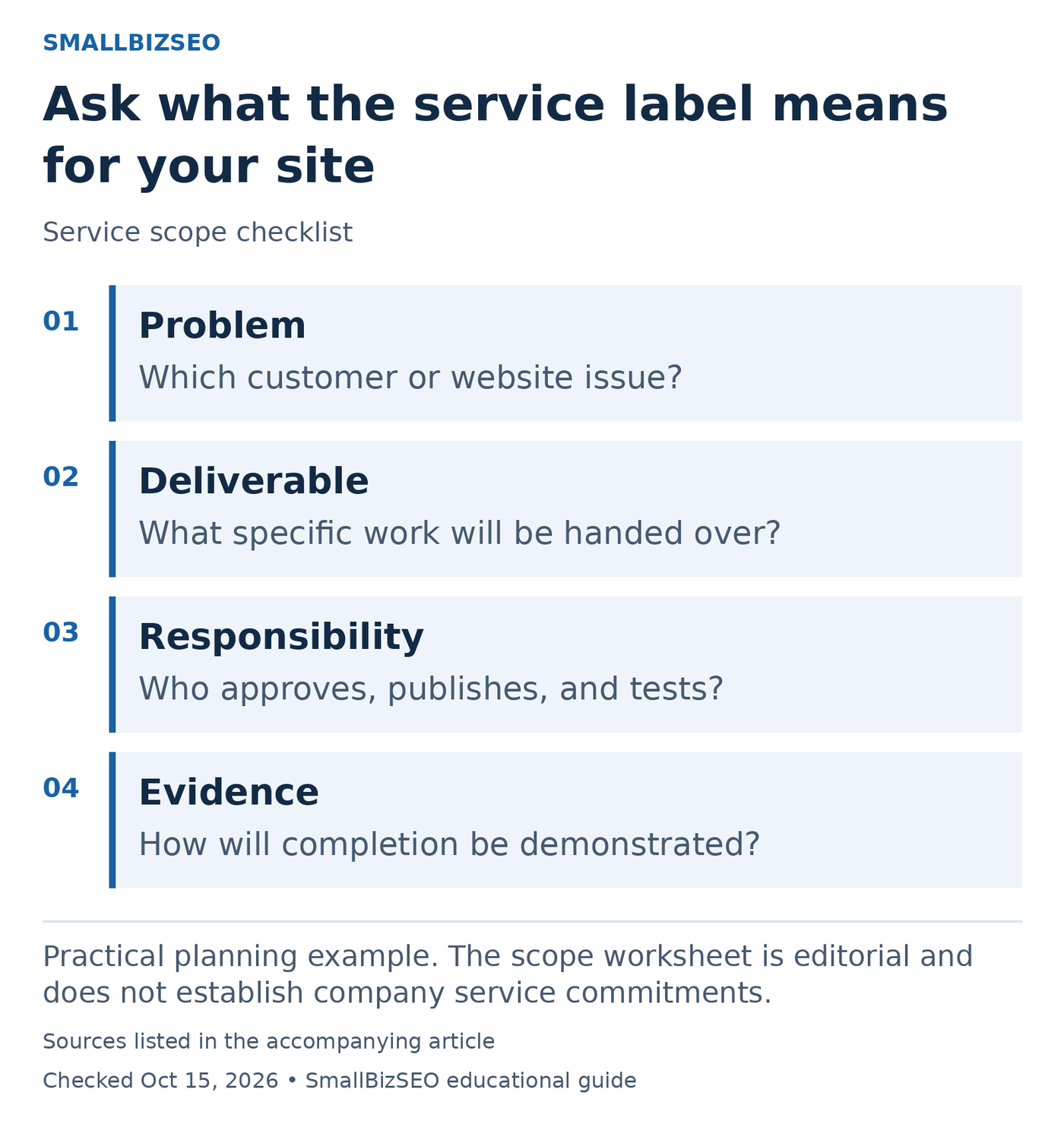
Practical planning example. The scope worksheet is editorial and does not establish company service commitments.
Sources: Google guidance on choosing an SEO. Checked October 15, 2026. This visual is an editorial guide, not measured client results.
Hypothetical example: “Technical recommendations for the service pages” could mean a findings document. It could also include implementation if that is expressly agreed. Ask separately whether the provider diagnoses the issue, changes the site, coordinates a developer, and verifies the live result. The label alone does not answer those questions.
For content, identify the target reader, the page to improve, the facts the business must supply, and the person authorized to approve publication. For reporting, identify the question the report should answer and any tracking setup needed before it can answer it.
Keep a small “to confirm” list beside the scope, covering dependencies, exclusions, approval steps, and the evidence of completion. Resolve it in the written proposal before relying on it. This worksheet helps interpret the options already described above; it does not add deliverables, quantities, integrations, or ongoing responsibilities to a SmallBizSEO package.
Reference: Google guidance on choosing an SEO. The scope worksheet is editorial and does not establish company service commitments.
What is a sensible next step?
Start with your website, priority services, target customers, and the customer action you want more of: calls, bookings, quote requests, or purchases. Review our service options, then ask for a recommendation based on those facts. SEO can improve the conditions for discovery and conversion, but no provider controls Google's results or can promise a particular ranking.