

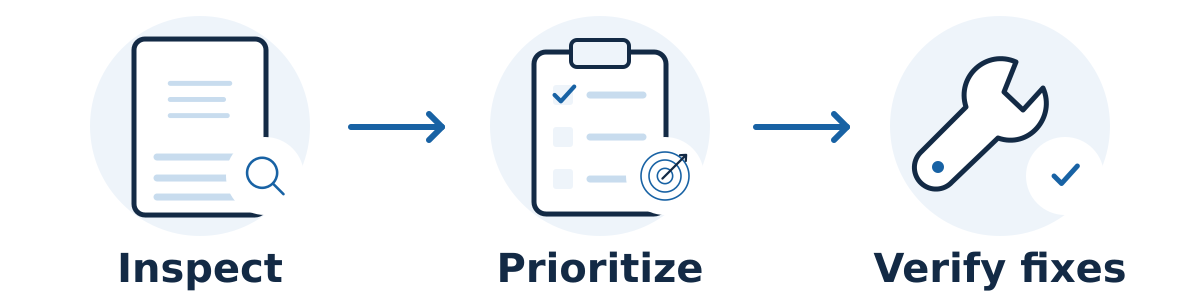
An SEO audit investigates why a website may be missing relevant search visibility or failing to turn visitors into useful inquiries. A good audit connects evidence to business priorities and identifies practical next steps. It should help you decide what to fix, improve, or investigate before committing resources.
What does SmallBizSEO look at?
SmallBizSEO's SEO services page describes a visibility-audit offer covering keyword opportunities, Google Business Profile gaps, technical issues, and priority recommendations. The relevant scope depends on the business. A company serving customers nationally may have different needs from a business that relies heavily on nearby searches.
Before requesting an audit, explain the concern you want resolved. For example: “Our main service page gets few inquiries,” “The new website lost search traffic,” or “Customers cannot find our second location.” A specific question helps make the investigation useful.
What should the investigation cover?
Discovery and indexing: whether important pages are accessible and eligible to appear in search.
Page purpose: whether pages address the services and questions that matter to prospective customers.
Website structure: whether navigation and links make important information easy to find.
Technical experience: issues such as broken destinations, poor mobile usability, or slow interactions.
Competitive context: which useful information or relevant search opportunities the business is missing.
Measurement: whether the available data can support conclusions about traffic and customer actions.
These are useful audit questions; the agreed scope determines the depth of investigation. Some findings require account access, developer input, or additional testing.
How should findings be prioritized?
Ask for the affected pages, the evidence, the likely business impact, and a recommended next step. A problem blocking a core service page from search may deserve attention before a minor formatting warning on a low-priority page.
For example, an audit might find that the contact form fails on mobile devices. Testing and repairing that failure can be more immediately useful than increasing a third-party SEO score. This example illustrates prioritization; it is not a diagnosis of your website.
Google advises evaluating third-party SEO recommendations against official guidance. Tool warnings are inputs for investigation. They should not automatically become an expensive implementation checklist.
Does an audit include fixing everything?
Confirm this before work begins. Identifying an issue, recommending a fix, implementing it, and checking the result are separate tasks. Ask who owns each step, what access is needed, and whether any work falls outside the agreed scope.
Ask for a finding you can turn into a task
Choose one important audit finding and ask for a complete evidence card. It should identify the affected URL or template, describe what was actually observed, and explain the customer or search problem. Keep an unconfirmed explanation clearly labeled as a hypothesis.
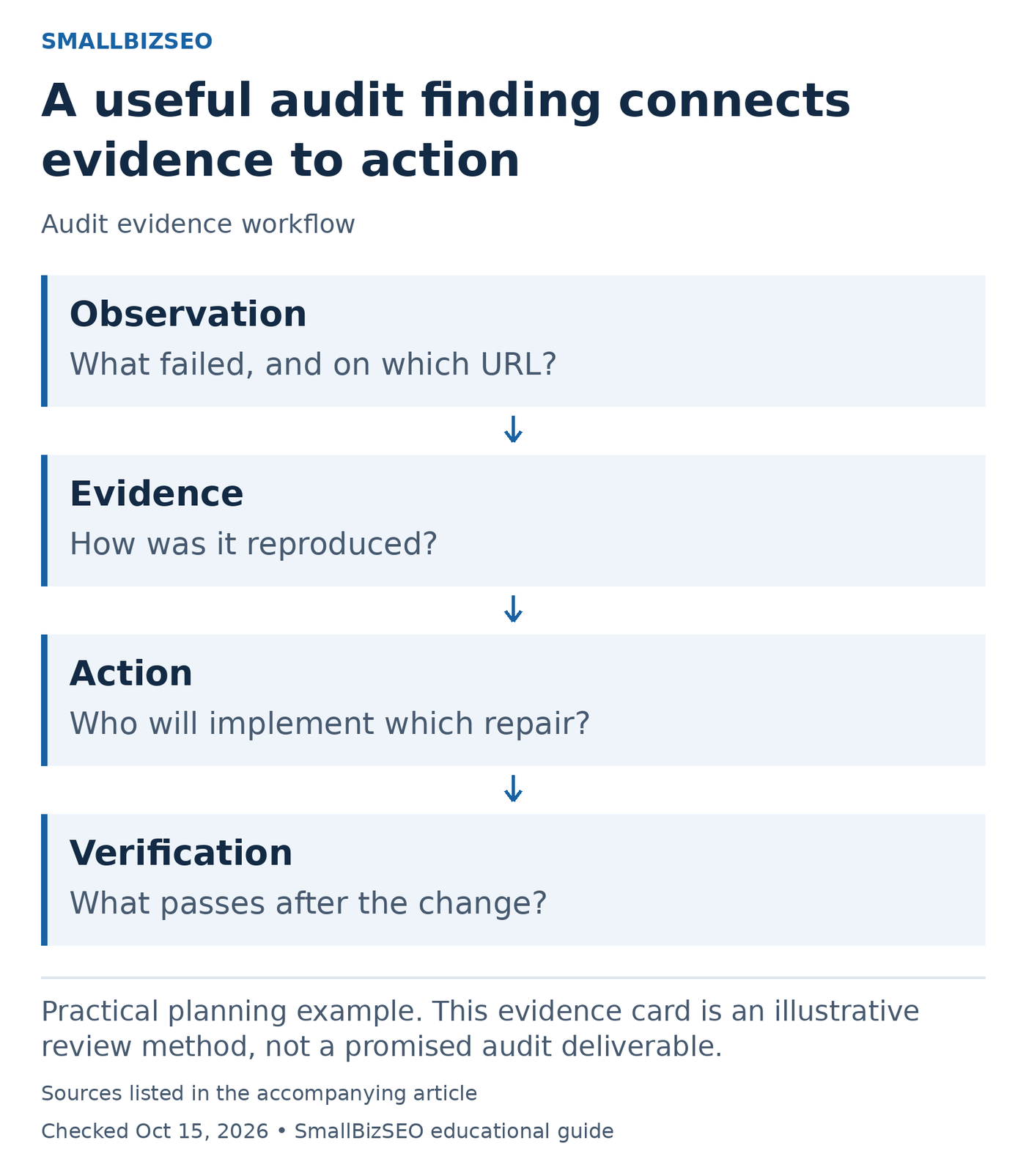
Practical planning example. This evidence card is an illustrative review method, not a promised audit deliverable.
Sources: Google guidance on evaluating SEO recommendations. Checked October 15, 2026. This visual is an editorial guide, not measured client results.
Hypothetical card: “The quote form on the installation page fails on a phone. A test submission shows an error and no message reaches the business. The website developer will investigate the submission failure. After repair, the test must reach the correct inbox and show the visitor a clear confirmation.” The form repair can be verified without claiming any ranking improvement.
Add implementation dependencies, an owner, and a way to reverse the change if it creates another problem. When a recommendation covers a whole template, ask which representative pages were tested and how the team will check for unintended effects elsewhere.
Keep three statuses separate: confirmed problem, change implemented, and result verified. A task may be implemented while verification is still outstanding. This makes an audit useful beyond the day it is delivered and prevents a tool’s warning count from becoming the only measure of progress. The agreed audit scope still determines which checks and repairs are included.
Reference: Google guidance on evaluating SEO recommendations. This evidence card is an illustrative review method, not a promised audit deliverable.
What should I prepare?
Bring your website address, important services, target market, known problems, and details of recent redesigns or migrations. If account access is needed for an initial audit, Google recommends read access to Search Console at that stage. Use an invitation with the appropriate role rather than sharing a password. The outcome should be a clearer decision about the work that matters most.