

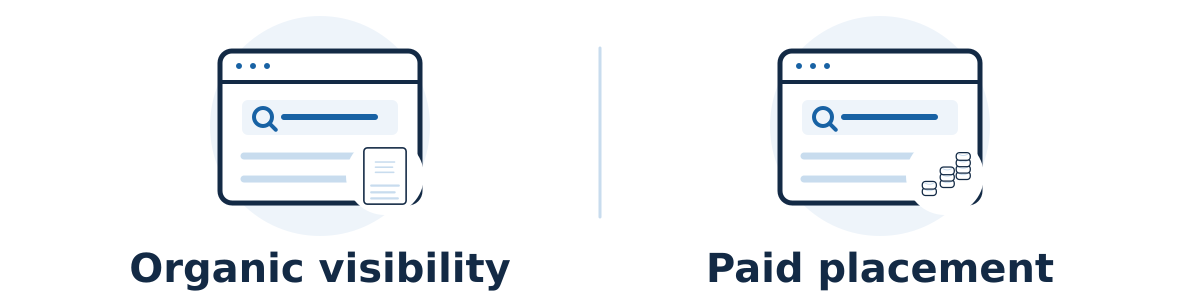
Choose based on your timeline, customer economics, and current website rather than assuming one channel is always better. Google Ads can help you test paid search demand, while SEO can develop your visibility in unpaid search results over time.
The two do not purchase the same outcome. Google states that advertising does not improve your organic rankings. Both channels still need relevant offers, useful pages, measurement, and a way to turn inquiries into customers.
Make the decision in four steps
Decide how urgent the demand is. If you need to promote an available service during a defined period, paid search may be worth testing once the campaign and destination page are ready. SEO is less controllable as a short-term launch tool. Neither channel guarantees leads or immediate profitability.
Check the value of a qualified customer. Work backward from profit contribution and an acceptable acquisition cost. Consider repeat business carefully rather than counting every possible future sale. A campaign that produces cheap inquiries can still be expensive if almost none become suitable customers.
Check the page and sales process. Can visitors understand the service, check whether they qualify, and contact someone? Who answers calls? If your form is broken or your offer is unclear, sending more visitors from either source may magnify the problem.
Choose a test you can fund and evaluate. Concentrate on one service, audience, or market. Set a review point and decide in advance what evidence would justify continuing, changing, or stopping the test.
Compare the full costs
For paid search, include advertising spend, management, landing-page work, and tracking. Ad placement depends on an auction; Google explains that the bid and the quality of the ad and landing page are among its factors. Spending more alone does not solve poor relevance.
For SEO, include implementation, content, technical support, measurement, and your team's time. There is no ad charge for each organic click, but producing and maintaining useful visibility still requires resources. Existing pages may keep attracting visits after a project ends, although future visibility is uncertain.
Example: a focused combination
Hypothetical example: An equipment-maintenance business has available appointments for one profitable service. It could run a limited paid-search test for that service while improving the website's explanation, proof, and inquiry process. It could then use the questions from real prospects to strengthen its longer-term content.
The owner should assess paid and organic results separately, using qualified inquiries and won jobs. A paid campaign's results can inform the offer and messaging, but they do not prove the same page will rank organically or produce identical conversion rates.
Pitfalls to avoid
Do not split a small budget so widely that neither channel receives enough attention. Avoid comparing ad spending with an SEO fee while leaving out management and implementation costs. Also avoid treating every recorded conversion as a sale.
Write the test rules before choosing a channel
A useful comparison starts with the same offer and business objective. Write down the audience, destination page, inquiry definition, cost boundary, and review decision before committing money. This keeps a cheap click or an encouraging ranking from quietly replacing the goal of suitable customers.
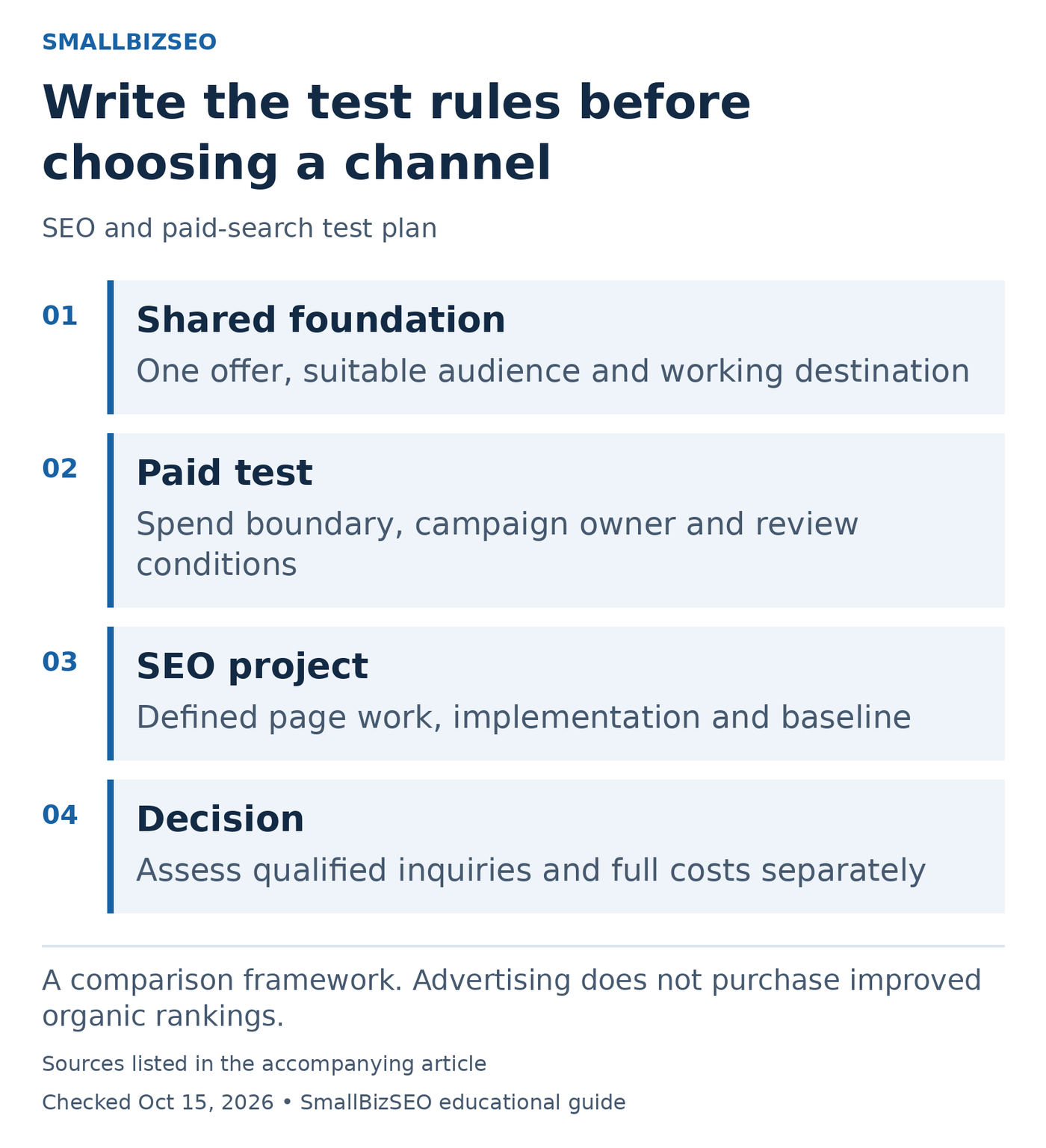
A comparison framework. Advertising does not purchase improved organic rankings.
Sources: Google official guidance. Checked October 15, 2026. This visual is an editorial guide, not measured client results.
For a paid-search test: state the service being advertised and the period or conditions the test is intended to cover. Include media spend, management, page preparation, and tracking in the budget. Decide who can pause or change the campaign if the inquiries are unsuitable or the budget boundary is reached.
For an SEO project: name the pages and customer questions being improved, the implementation owner, and the evidence needed to assess progress. Record the baseline before work goes live. Budget for changes being implemented, not just for receiving recommendations.
For either approach: define a qualified inquiry using the business’s actual requirements. A form completion outside your service area should not count the same way as an appropriate customer request. Keep unanswered calls and won work visible so weak follow-up is not mistaken for a channel failure.
If both channels run, report their costs and observed outcomes separately before considering the combined picture. A hypothetical paid test might reveal a frequently misunderstood service limit that belongs on the website. That is useful learning, but it does not establish that advertising will improve organic rankings or that organic visitors will behave identically.
Reference: Google’s official guidance. This checklist is an editorial planning aid; checked October 15, 2026.
Your next step
Write down your deadline, maximum test budget, target service, and acceptable customer-acquisition cost. Use those constraints to choose one primary channel and a clear measurement plan.