

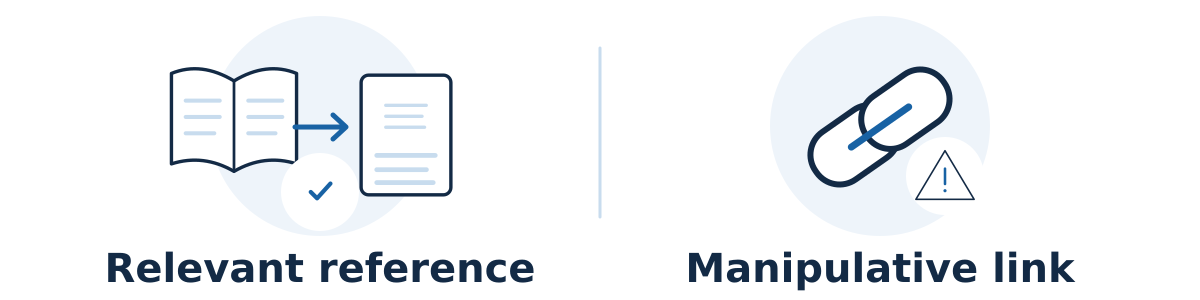
A backlink is a link from another website to yours. A worthwhile link usually has a credible reason to exist: it helps a relevant audience find your business, supports a statement, or points to information worth reading. Its usefulness should be assessed in context, rather than by a link count alone.
Links may support discovery and search visibility, but no individual placement or package can guarantee a ranking or a stream of customers.
Evaluate the page, audience, and reason for the link
Before pursuing an opportunity, ask:
Would the right people read this page? A genuine industry resource or community organization may reach a more relevant audience than a broad site selling exposure to everyone.
Does the link help the reader? The destination should support the surrounding subject. A connection that needs an elaborate explanation is a reason to pause.
Is there a real editorial purpose? Look for useful articles, identifiable organizations, maintained resources, and legitimate business activity.
What is being promised? Guaranteed rankings, bulk placements, secret networks, or a requirement for exact keyword-rich wording deserve scrutiny.
Can you inspect the actual work? Ask to see the linking page, destination, context, and any commercial arrangement. A dashboard total without those details is difficult to evaluate.
Understand the risky tactics
Google's link-spam policy covers links created primarily to manipulate rankings. Examples include paying for ranking credit, excessive reciprocal exchanges, and automated link creation. Offering goods or services in exchange for such links can also fall within the policy.
Advertising and sponsorships need to be transparent. Google's outbound-link guidance says paid placements should use the sponsored attribute; nofollow is also acceptable for this purpose. Treat advertising as an audience and referral decision, and do not buy it on the promise of passing ranking credit.
Build reasons for relevant people to mention you
Useful starting points include maintaining accurate listings with legitimate organizations you belong to, contributing genuine expertise to relevant publications, publishing original resources, and sharing work that others have a reason to reference. A trade association listing or supplier directory should reflect a real relationship, not a manufactured exchange network.
Before creating a resource, identify the audience and the question it will answer. A clear checklist drawn from genuine experience may be more useful than a generic article created solely to attract links.
A hypothetical example
Imagine a commercial landscaper develops a practical seasonal maintenance checklist based on its actual work. An industry association references it because members find it useful. That is a different proposition from buying hundreds of unrelated placements with promises of higher rankings. The example illustrates a useful editorial reason; it is not a claim about a completed campaign.
A three-way screen for link opportunities
When someone offers a placement, classify the opportunity before discussing a price or a link count. Save the proposed page, intended audience, destination on your site, and the reason a reader would follow the link. If these cannot be explained, request more detail before committing.
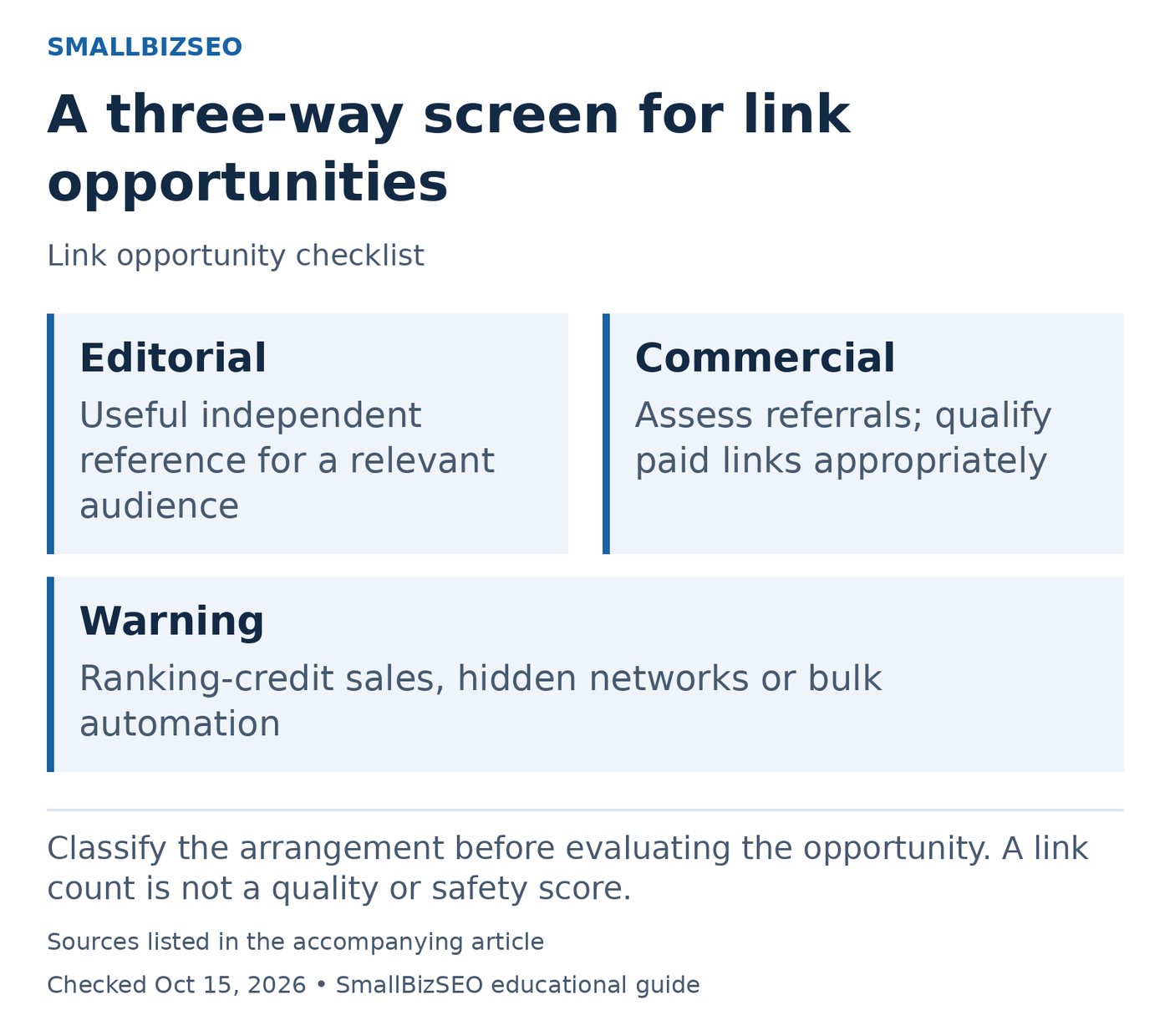
Classify the arrangement before evaluating the opportunity. A link count is not a quality or safety score.
Sources: Google official guidance. Checked October 15, 2026. This visual is an editorial guide, not measured client results.
Editorial opportunity: a relevant publisher independently chooses to cite a useful resource or expert contribution. Ask what knowledge you can genuinely add. Do not demand a particular ranking-oriented phrase or assume that offering a contribution guarantees publication.
Advertising or sponsorship: a placement is paid for or commercially arranged. Assess audience fit, the offer, and how referrals could be measured. Google requires paid links to be appropriately qualified; its policy accepts sponsored or nofollow. A legitimate advertisement can still be worthwhile without a promise of ranking credit.
Manipulation warning: the pitch revolves around guaranteed ranking gains, hidden networks, automated placements, or payment for links that pass ranking credit. Pause the purchase and ask for the actual method. A respectable-looking score does not resolve a problematic arrangement.
For example, a hypothetical equipment supplier could contribute a maintenance explanation to an industry publication or sponsor a clearly labeled event listing. Those are different activities with different evaluation criteria. Record editorial mentions, advertising spend, and resulting referrals separately. Judge the opportunity on its real purpose rather than blending everything into a single “links built” total.
Reference: Google’s official guidance. This checklist is an editorial planning aid; checked October 15, 2026.
Common mistakes and the next step
Avoid judging links only by a vendor's score, treating every unfamiliar link as an emergency, or buying packages before reviewing the method. Ask a provider to explain where links would come from, why those audiences matter, and how commercial relationships are handled. Favor opportunities you would still value for credibility or referrals if search rankings did not change.