


Digital PR is work that earns relevant online attention for your business through useful stories, evidence, or expertise. It can involve journalists, trade publications, podcasts, and other credible publishers. It is most useful when you have something their audiences genuinely need and a clear reason those audiences matter to your business.
Public relations includes building relationships and understanding stakeholders, as described by the Public Relations Society of America. In an SEO plan, digital PR may also lead to editorial links and discovery, but coverage and rankings remain outside your control.
Identify something worth sharing
A strong starting point could be a well-documented change in your industry, an original resource, a genuinely notable project, or practical expertise on a timely issue. The useful test is whether someone would care if your company name were removed from the pitch.
Prepare the evidence before outreach. Check the underlying numbers, explain how any research was done, distinguish observation from interpretation, and obtain permission for client details or photographs. A small sample from your own customers should not be presented as representative of an entire market.
A hypothetical example
A repair business notices recurring maintenance mistakes across its own anonymized job records. It prepares a careful explanation of those patterns, states the limits of the sample, and offers a knowledgeable spokesperson to a relevant trade publication. That could produce a useful story. Claiming to have proved a national trend from a handful of jobs would undermine it.
Decide whether the investment fits
Audience: Does the publisher reach plausible buyers, referral partners, or people who influence their decisions?
Evidence: Can you substantiate the story and answer follow-up questions?
Capacity: Can someone respond reliably if a journalist needs clarification or an interview?
Website readiness: Will interested readers find a useful resource, clear service information, and an appropriate next step?
Opportunity cost: Would fixing a missing service page or broken inquiry route be more valuable right now?
Separate earned coverage from paid placement
Be wary of proposals built around guaranteed ranking-credit links. Google's link-spam rules cover purchased ranking links and certain manipulative press-release or advertorial practices. Advertising and sponsorship can be legitimate, but qualifying paid links as sponsored or nofollow matters. A distribution service's list of reposts is not the same as journalists independently choosing to cover your story.
Assess relevant coverage, referral visits, qualified inquiries, and useful new relationships. A publication can be valuable without adding a link, while an impressive-looking link may send no suitable customers. Attribution is imperfect, and no single campaign promises an immediate financial return.
Test a story before pitching it
Write a four-part story card before paying for outreach: the audience, the useful finding, the evidence behind it, and the person available to explain it. A story that only says the business is excellent still needs a reason for someone outside the business to care.
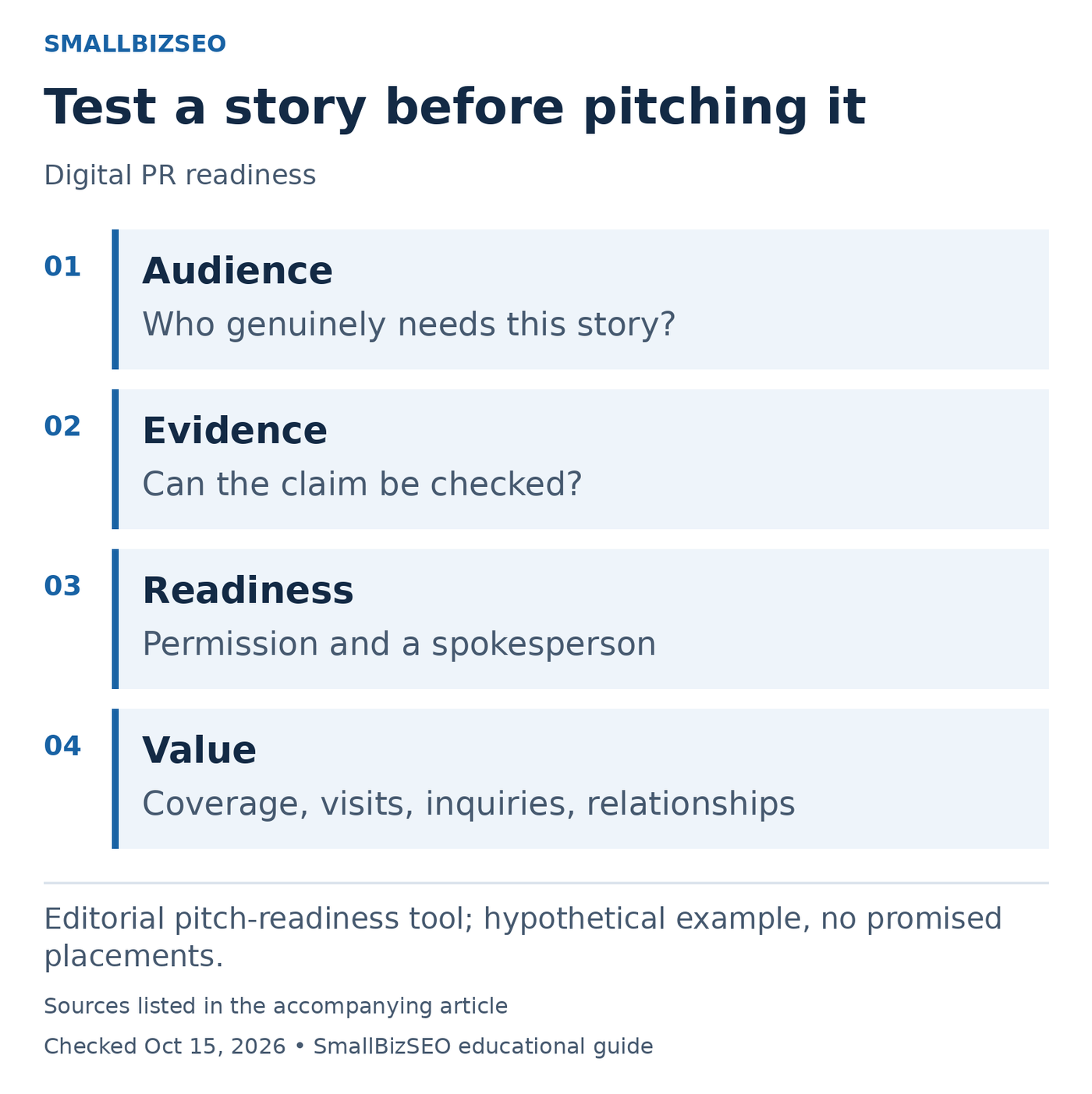
Editorial pitch-readiness tool; hypothetical example, no promised placements.
Sources: Google link-spam policies. Checked October 15, 2026. This visual is an editorial guide, not measured client results.
Hypothetical example: A print shop creates a freely available large-print event-program template. Before pitching it to a community-events publication, the shop documents its design choices, tests a sample with consenting intended users, and obtains permission for any quoted feedback. Its pitch links to the usable template and explains its limits. It should describe the actual testing rather than claim the template is accessible to everyone or certified when it is not.
Run an evidence check before outreach. Can someone inspect the method or source? Is permission available for any photograph or customer story? Are the limitations stated? Could the business defend the headline if a journalist asks a challenging question? Narrow an overstated finding instead of making the headline more dramatic.
Finally, define a useful result: relevant coverage, referral visits, informed inquiries, or a new professional relationship. Keep paid placements separate from independently chosen coverage. Google’s link-spam policy is a reason to reject arrangements whose purpose is buying ranking credit; an impressive-looking publication list does not remove that risk.
Reference: Google link-spam policies
Your next step
Write a short outline of one credible story, its supporting evidence, and the specific audience that would benefit. Use that to judge whether outreach is ready or whether stronger underlying material should come first.