


Usually, an unfamiliar or low-quality backlink is not a reason to disavow links. Google says most websites do not need its disavow tool and warns that incorrect use can harm search performance. Investigate the evidence before changing anything, especially if the concern comes from a third-party “toxic link” score.
When might disavowing be appropriate?
Google's disavow guidance describes a narrow situation: a considerable number of spammy, artificial, or low-quality links, combined with a manual action or a likelihood that those links will cause one. It recommends trying to remove problematic links first where possible.
This can matter when a business or a previous provider deliberately participated in a link scheme. It is different from simply noticing strange websites in a backlink report.
What should I check first?
Is there an unnatural-links manual action in Search Console?
Is there evidence that your business or a former provider arranged problematic links?
Which exact links are concerning, and why?
Is the concern based on the placement and history, or just a software score?
Could an unrelated website or tracking change explain the performance problem?
Keep the original report and a record of what you find. A careful review should explain the evidence for each proposed action. A large automated list with no explanation is difficult to evaluate and can include legitimate references.
What if a tool says the links are toxic?
Treat that as a prompt for review. The tool's label is not a Google manual action. Google's guidance on third-party tools makes clear that they cannot see its internal ranking data.
For example, an obscure website mentioning an old business event may look unusual in a report but still be an authentic reference. A link sold specifically to manipulate rankings raises a different concern. The reason for the link matters.
Should I contact every linking website?
No. Begin with a diagnosis and a proportionate plan. Broad removal requests can consume time and disrupt useful relationships. If harmful links were intentionally arranged, keep records of the history and any reasonable removal efforts. Use a qualified reviewer for a significant link-scheme problem.
Use two gates before considering disavow
Keep a backlink-review record separate from the tool’s risk labels. Include the linking URL, the page it targets, why the link looks concerning, whether the business or a previous provider arranged it, and any relevant Search Console notice. A strange domain name alone is not a complete diagnosis.
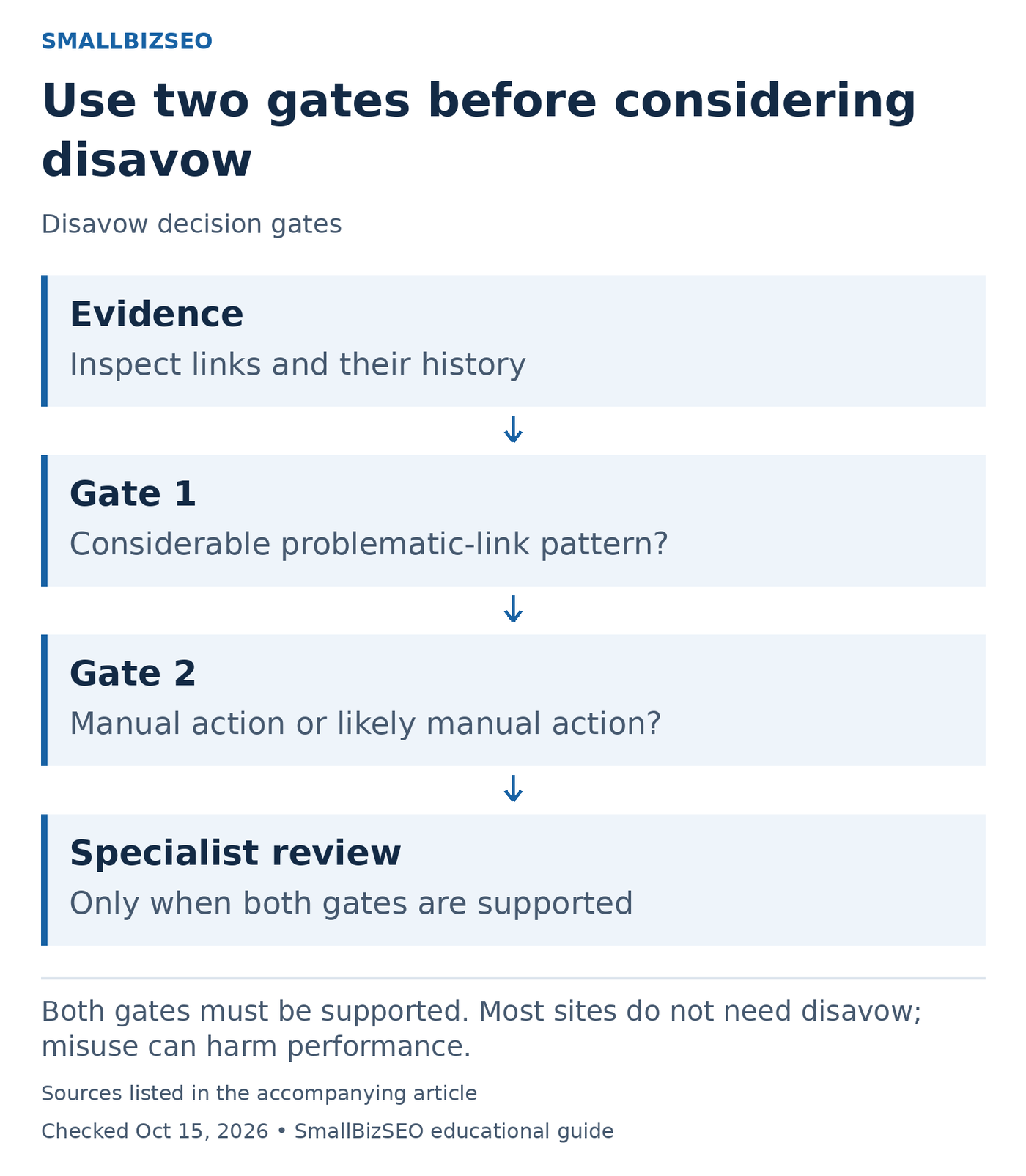
Both gates must be supported. Most sites do not need disavow; misuse can harm performance.
Sources: Google disavow guidance. Checked October 15, 2026. This visual is an editorial guide, not measured client results.
Gate one: establish the pattern. Is there evidence of a considerable number of artificial, spammy, or low-quality links? Review representative examples and their history instead of copying an entire automated list into a removal file.
Gate two: establish the consequence. Have those links caused a manual action, or is there a supported reason to think they are likely to? Google’s disavow guidance requires both conditions. A traffic decline or a vendor’s “toxic” label does not establish the second condition by itself.
When both gates are supported, have a qualified reviewer plan appropriate removal efforts and assess any links that cannot be removed. Preserve records and obtain approval for the specific intervention. Incorrect disavow use can harm performance.
When the gates are not supported, document the finding and investigate other explanations for the problem. This is a decision aid for review, not an instruction to submit a disavow file.
Reference: Google disavow guidance
What is the safest next step?
Collect the relevant Search Console notices, examples of suspicious links, past outreach records, and the date any performance change began. Ask for an evidence-based assessment before authorizing removals or a disavow submission. A disavow file is an advanced intervention, not routine website housekeeping or a shortcut to better rankings.