

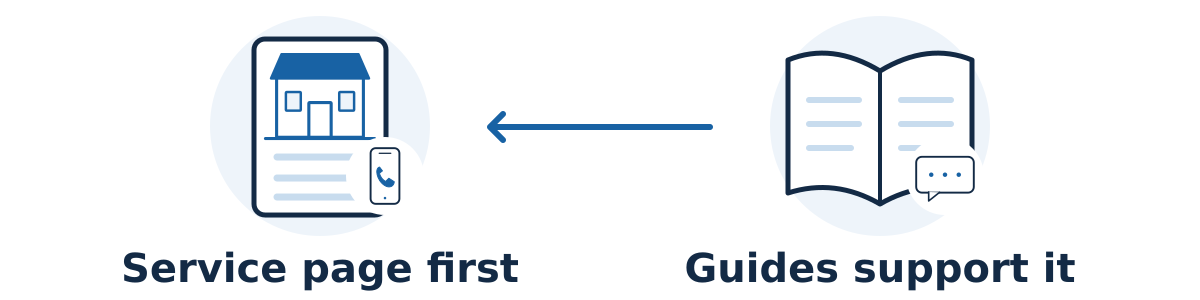
No. A blog is one way to publish useful content, and many businesses should improve their core service or product pages first. Start a blog when you have relevant questions to answer, something worthwhile to contribute, and the capacity to keep the information dependable.
Fix the buying journey before adding volume
Imagine a visitor arriving today. Can they tell what you offer, whether you serve them, why they should trust you, and how to take the next step? If those answers are missing, a new batch of articles may send more people into an incomplete buying journey.
A useful website can combine service pages, product information, project examples, comparisons, FAQs, and guides. Those resources do not have to sit in a folder labeled “blog.” Google's SEO Starter Guide emphasizes helpful content and a site that people and search engines can navigate; a particular publishing label is not the goal.
For a business that reaches customers on LinkedIn, its company page can be another place to explain the offer. LinkedIn's own company-page guide recommends completing company details, describing products and services clearly, and including the website link.
A blog earns its place when it has a job
Answer a recurring decision question: Explain what changes a project's scope, how to prepare for a service, or how to compare suitable options.
Show practical expertise: Use an approved project, a documented process, or an expert explanation that adds information readers cannot get from a generic summary.
Support an important service: Connect the article to the relevant service page when that link helps the reader. Avoid adding an unrelated sales pitch to every paragraph.
Help existing customers: A good guide can reduce repeat questions and make service delivery smoother, even when it attracts modest search traffic.
A hypothetical example
A cabinet installer has a vague homepage and no page explaining installation. Publishing “Ten kitchen trends” every month would leave the main service unclear. A detailed installation page may be the better first investment. Later, an article explaining how to prepare a kitchen before installation could help prospective and booked customers, with a relevant link to the service.
Choose a sustainable scope
Collect questions from sales calls and customer emails. Group questions that belong together, then choose a few where your team can add useful specifics. Decide who can verify the advice, supply evidence, and update changeable details before committing to a publishing schedule.
Do not measure success only by article count or visits. Look for useful customer engagement, relevant inquiries, and whether readers reach the pages that explain your offer. An article can attract many visitors with no intention of buying from a business like yours.
There is no dependable rule that a certain number of posts produces a certain ranking or lead total. A neglected blog also creates maintenance work, so avoid launching one simply to satisfy a quota.
Give a proposed article a job before creating it
Complete a short commissioning card for one proposed article. Write the reader’s actual question, where you heard it, the decision the answer supports, and the useful information your team can contribute. If those fields stay vague, gather more evidence before scheduling production.
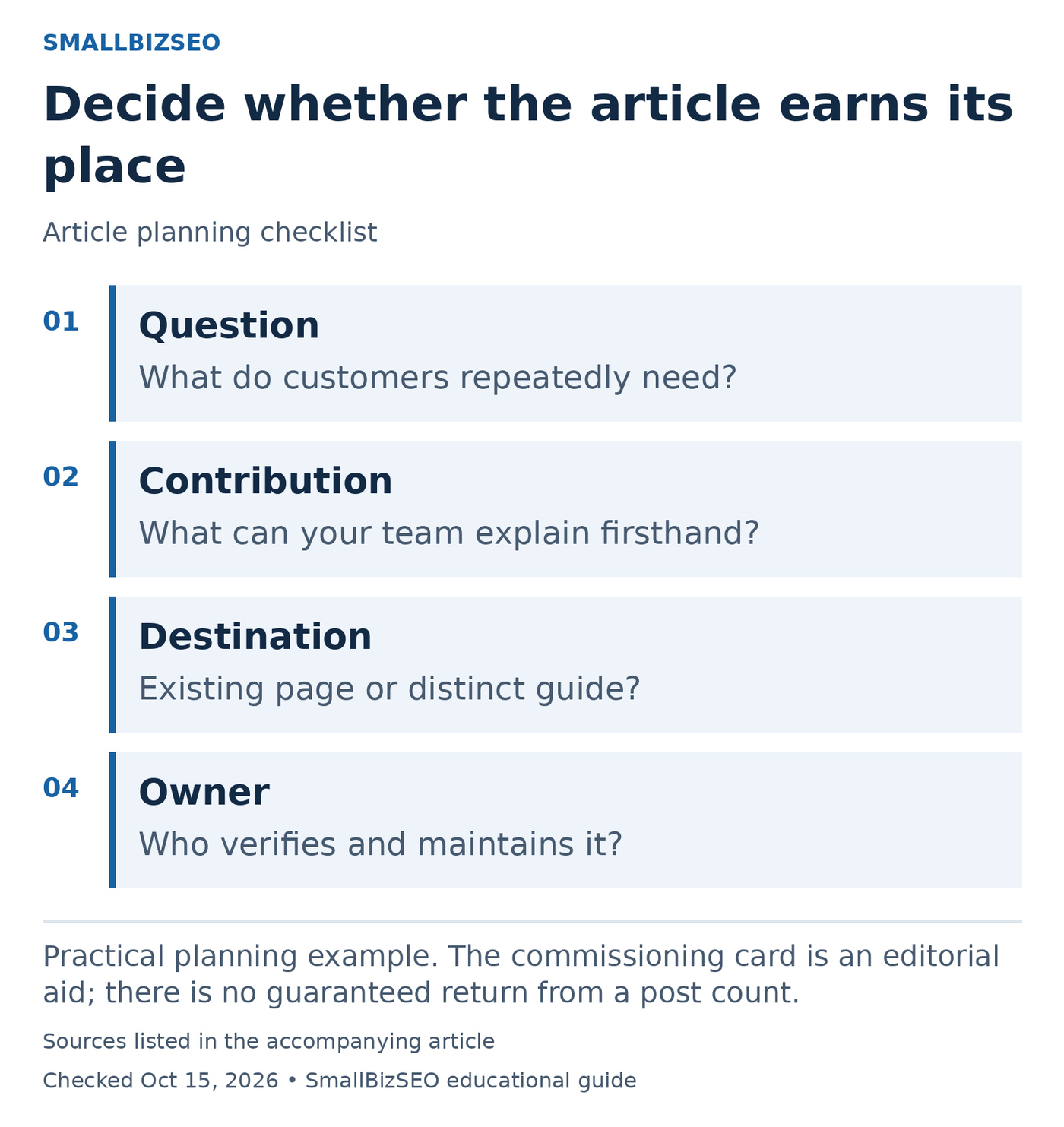
Practical planning example. The commissioning card is an editorial aid; there is no guaranteed return from a post count.
Sources: Google people-first content guidance. Checked October 15, 2026. This visual is an editorial guide, not measured client results.
Next, check whether an existing page should answer the question. A short clarification about service eligibility may belong on the service page itself. A substantial preparation process used by both prospective and booked customers may justify a separate guide. Choose the format around the task rather than a need to fill a blog calendar.
Hypothetical example: A furniture restorer repeatedly explains how to photograph damage before requesting an estimate. A practical photo checklist could make inquiries easier to assess. The contribution might include approved example images and explanations of which angles help. A generic article about fashionable furniture may have a weaker connection to that need.
Before commissioning, name the expert who will verify the advice and the person who will keep it accurate. Decide how to observe usefulness, such as fewer incomplete estimate requests or more visits to the relevant service explanation. These observations are a learning plan, not a promised improvement or a required publishing quota.
Reference: Google people-first content guidance. The commissioning card is an editorial aid; there is no guaranteed return from a post count.
Your next step
Write down five questions customers ask before buying. Check whether your existing pages already answer them, and develop the most important unanswered question in the format that serves it best.